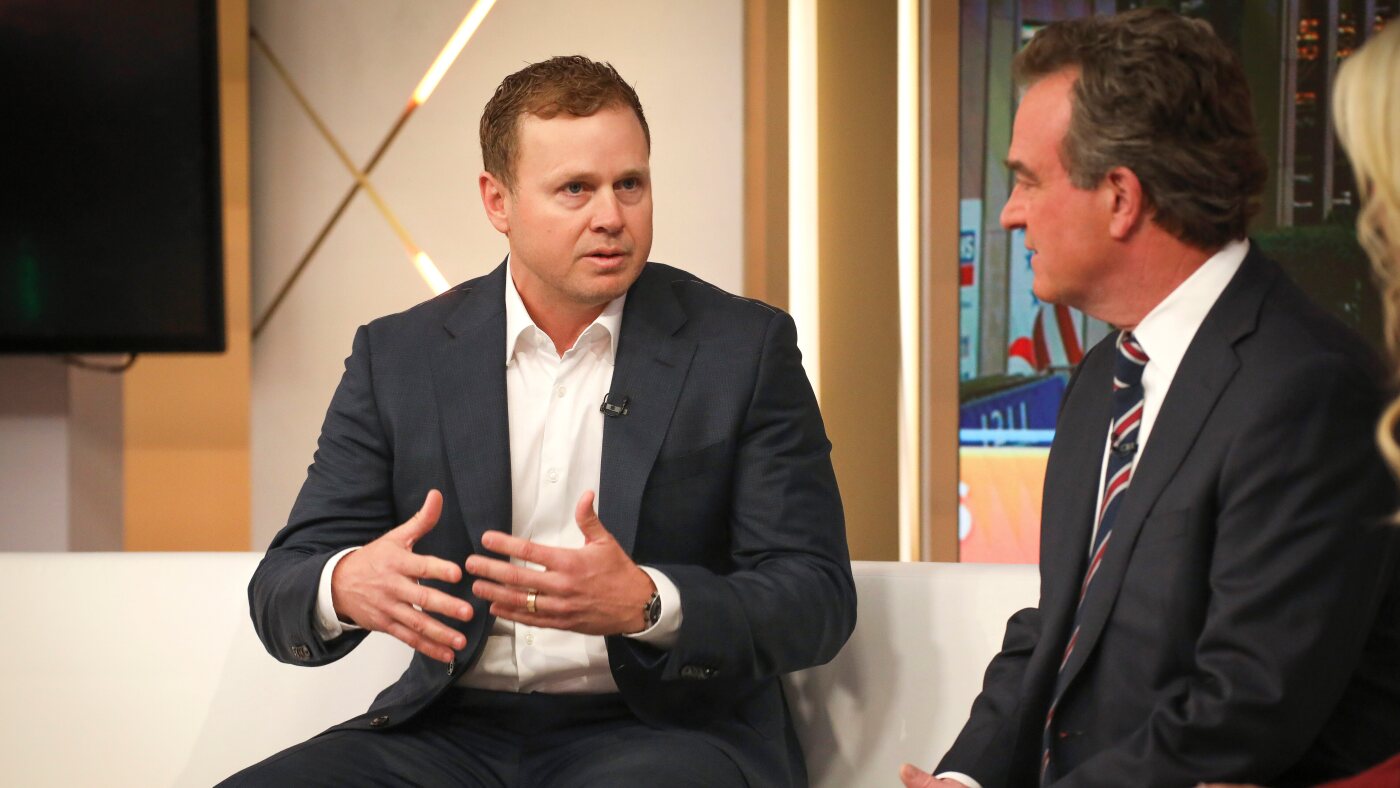
Stock Market Forum - Make smarter valuation decisions with comprehensive tools. Spencer Pratt, a former reality television personality, is employing an aggressive social media strategy—featuring edgy humor, AI-generated content, and combative rhetoric—to build momentum for a potential Los Angeles mayoral bid. Political experts suggest this approach may represent the future of online campaigning, offering a glimpse into how digital engagement could reshape political marketing and related industries.
Live News
Stock Market Forum - Access to multiple perspectives can help refine investment strategies. Traders who consult different data sources often avoid relying on a single signal, reducing the risk of following false trends. Spencer Pratt, best known for his role on the reality series “The Hills,” has shifted his focus to a possible run for mayor of Los Angeles. According to a report by NPR, Pratt is “flooding social media” with a mix of edgy humor, AI-generated “slop,” and combative rhetoric as a deliberate strategy to capture attention and appeal to highly online voters. This method, which some political experts describe as “winning the internet,” could signal a new era in political campaigning. The approach leans heavily on viral content and controversial statements, designed to maximize engagement across platforms like X (formerly Twitter) and TikTok. Pratt’s tactics are not traditional; instead of policy-focused messaging, he relies on meme culture and provocative posts to build a digital following. Political analysts quoted in the NPR story note that this style may become more common as candidates seek to break through the noise of a crowded information environment. The use of AI-generated content—often referred to colloquially as “AI slop”—adds an element of novelty and low-cost production, potentially lowering barriers for entry into political races.
Spencer Pratt’s Online Campaign Strategy: A Case Study in Digital Political Marketing and Its Potential Market ImplicationsSome investors find that using dashboards with aggregated market data helps streamline analysis. Instead of jumping between platforms, they can view multiple asset classes in one interface. This not only saves time but also highlights correlations that might otherwise go unnoticed.Cross-asset correlation analysis often reveals hidden dependencies between markets. For example, fluctuations in oil prices can have a direct impact on energy equities, while currency shifts influence multinational corporate earnings. Professionals leverage these relationships to enhance portfolio resilience and exploit arbitrage opportunities.Traders frequently use data as a confirmation tool rather than a primary signal. By validating ideas with multiple sources, they reduce the risk of acting on incomplete information.Historical patterns can be a powerful guide, but they are not infallible. Market conditions change over time due to policy shifts, technological advancements, and evolving investor behavior. Combining past data with real-time insights enables traders to adapt strategies without relying solely on outdated assumptions.Some investors prioritize clarity over quantity. While abundant data is useful, overwhelming dashboards may hinder quick decision-making.Investors who keep detailed records of past trades often gain an edge over those who do not. Reviewing successes and failures allows them to identify patterns in decision-making, understand what strategies work best under certain conditions, and refine their approach over time.
Key Highlights
Stock Market Forum - Real-time tracking of futures markets can provide early signals for equity movements. Since futures often react quickly to news, they serve as a leading indicator in many cases. - Key takeaway: Pratt’s campaign illustrates a shift toward “personality-driven” online politics, where engagement metrics may outweigh traditional policy platforms. - Market implication: Social media companies could see increased usage during election cycles if such strategies prove effective, potentially boosting advertising revenue and user retention. - Sector impact: Political consulting firms and digital marketing agencies may need to adapt to demand for unconventional, viral-first campaign tactics, possibly creating new service offerings centered on AI content generation. - Risk consideration: The combative and controversial nature of this approach could lead to platform moderation challenges, affecting content policies and shareholder sentiment for social media firms. - Investor angle: Companies that provide AI tools for content creation (e.g., generative text and image platforms) might benefit from increased adoption in political advertising, though regulatory risks remain.
Spencer Pratt’s Online Campaign Strategy: A Case Study in Digital Political Marketing and Its Potential Market ImplicationsMonitoring global indices can help identify shifts in overall sentiment. These changes often influence individual stocks.Access to futures, forex, and commodity data broadens perspective. Traders gain insight into potential influences on equities.Many traders use a combination of indicators to confirm trends. Alignment between multiple signals increases confidence in decisions.Technical analysis can be enhanced by layering multiple indicators together. For example, combining moving averages with momentum oscillators often provides clearer signals than relying on a single tool. This approach can help confirm trends and reduce false signals in volatile markets.Market participants often combine qualitative and quantitative inputs. This hybrid approach enhances decision confidence.Combining technical analysis with market data provides a multi-dimensional view. Some traders use trend lines, moving averages, and volume alongside commodity and currency indicators to validate potential trade setups.
Expert Insights
Stock Market Forum - Understanding liquidity is crucial for timing trades effectively. Thinly traded markets can be more volatile and susceptible to large swings. Being aware of market depth, volume trends, and the behavior of large institutional players helps traders plan entries and exits more efficiently. From an investment perspective, Pratt’s strategy highlights a potential evolution in how political candidates allocate resources. Traditional media spending—TV ads, direct mail—may continue to decline relative to digital engagement, particularly among younger demographics. If this model gains traction, firms offering targeted social media advertising, analytics, and AI content production could see increased demand. However, cautious language is warranted. The effectiveness of such a campaign in securing an actual mayoral victory remains uncertain. While Pratt may be “winning the internet,” translating online popularity into real-world votes is a different challenge. Political experts cited in the source note that this style is still experimental, and its long-term viability has not been proven. Investors in social media platforms or digital advertising should monitor whether regulatory bodies introduce new rules around AI-generated political content, which could alter the landscape. Moreover, the combative rhetoric carries reputational risk for both the candidate and the platforms that host such content. Any backlash could lead to advertiser pullbacks or increased content moderation costs. As the 2024 election cycle approaches, this case may offer early indicators of how digital-first campaigns evolve—but it is too early to draw definitive conclusions about market impact. Disclaimer: This analysis is for informational purposes only and does not constitute investment advice.
Spencer Pratt’s Online Campaign Strategy: A Case Study in Digital Political Marketing and Its Potential Market ImplicationsObserving market cycles helps in timing investments more effectively. Recognizing phases of accumulation, expansion, and correction allows traders to position themselves strategically for both gains and risk management.Some investors track short-term indicators to complement long-term strategies. The combination offers insights into immediate market shifts and overarching trends.Access to real-time data enables quicker decision-making. Traders can adapt strategies dynamically as market conditions evolve.Some investors integrate technical signals with fundamental analysis. The combination helps balance short-term opportunities with long-term portfolio health.Volatility can present both risks and opportunities. Investors who manage their exposure carefully while capitalizing on price swings often achieve better outcomes than those who react emotionally.Monitoring macroeconomic indicators alongside asset performance is essential. Interest rates, employment data, and GDP growth often influence investor sentiment and sector-specific trends.